
Free QR Code Generator

Create URL, WiFi, text, vCard, social, menu, review, and PDF-link QR codes, then style them with AI.

Static codes never expire and have no scan limit

No account needed. Pick a type, fill it in, and download a static QR code.

More tools

Details

Preview

The preview appears after you fill in the form.

You can also press Generate.

Analytics Showcase
Sample data

Dashboard preview

A preview of scan trends, sources, devices, and regions in the CodeBox dashboard. The figures below are sample data, not live scan statistics.

codebox.club/dashboard/qrcode/analytics
Analytics Overview

QR Analytics Dashboard

Sample data

From total scans and unique visitors to channel and regional breakdowns, this preview demonstrates the full analytics loop behind dynamic QR campaigns.

7D30D
Sample data · not live scan statistics
Scan Trend

Highlight lift, momentum, and peak days after launch

Showing Scans
Performance Readout
4.9K
Peak daily scans
Peak date
4/18
Average
3.2K
Top Channel Mix
Scans
W
WeChat groups
utm_source
34
O
Offline posters
social mix
26
O
Official account posts
campaign push
18
Top Active Regions
Scans
Shanghai
86.0%
38
Shenzhen
64.0%
26
Hangzhou
48.0%
19
Device Mix
Scans
Mobile
Largest share
62
Desktop
Desktop visits
27
Tablet
Tablet traffic
11

More than a generator
Easier to design, easier to scan

A free QR code designer for a code that still looks like your brand.
QR Code Creation
✨
01

How to Create QR Codes for Free

Choose a type in the editor: URL, text, WiFi, vCard, Xiaohongshu, Douyin, Instagram, TikTok, WhatsApp, Telegram, a menu link, a review page, or a PDF link. Then adjust the colors, shapes, and logo.
Free
QR Code
Create
Data Statistics & Analysis
✨
02

Download, Print, Track Data

Download the PNG and print it. URL, social, menu, review, and PDF links can be saved as dynamic codes with scan tracking. Text displays its content directly, and a static vCard can add a contact when scanned.
Short Links
Data Statistics
UTM
API Service
✨
03

API Service Integration

CodeBox's exclusive QR code generator provides API interfaces, each user has their own exclusive APIKEY, through the APIKEY to call the provided interfaces, you can obtain QR code related data, convenient for development integration into your own application systems.

API Service
System Integration
APIKEY
More features are on the way🚀
Credit wallet

Static codes stay free. 5 free live codes every month

Changing the link, the expiry, or UTM is free. A code stays valid until you set an expiry.

Static codes never expire and have no scan limit

  • Static codes stay free
  • 5 free live codes every month
  • Link, expiry, and UTM edits are free
  • Static codes never expire and have no scan limit
Free allowance

5 free live codes every month

Each month includes 50 credits, enough for 5 live codes. The same credits can instead make 2 AI Standard codes or 1 AI art code. Unused free credits reset next month and do not roll over.

Static codes stay free

Static codes cost 0 credits and do not expire on their own. A signed-in account can save 50 per month.

Loading credit packs

Secure checkout

WeChat Pay confirms the payment, then the credits land in your wallet.

Ready immediately

You can create more codes as soon as the payment succeeds.

Purchased credits last

Credits you buy do not expire. Use them on your own schedule.

After a live code is created, changing its link, expiry, or UTM does not cost credits.

A code has no expiry unless you set one. Only a date you choose will turn it off.

Live code 10 credits, AI Standard 20, AI art code 50. Purchased credits do not expire.

What is free?

Static codes cost 0 credits. Static codes never expire and have no scan limit. Each month you also get 50 credits, enough for 5 live codes if you spend them that way. A signed-in account can save 50 static codes a month.

Do live codes expire?

Not unless you set an expiry. Changing the link, the expiry, or UTM after creation is free. Purchased credits do not expire. Unused monthly free credits reset and do not roll over.

What does a credit pack buy?

A live code costs 10 credits. AI Standard costs 20. An AI art code costs 50. The line on each pack is that pack's price divided by those costs.

FAQ

Introduction to QR Codes

QR code (Quick Response Code) is a two-dimensional barcode technology invented by Japan's Denso company, which can store data in both horizontal and vertical directions. Compared with traditional one-dimensional barcodes, QR codes have higher data capacity and faster scanning speed. QR codes can be used to store URLs, text, phone numbers, contact information, payment links, etc. Users only need to use their mobile phone camera or scanning app to aim at the QR code to identify and access the content. In daily life, QR codes are widely used in mobile payments, ticketing systems, electronic business cards, smart device networking, advertising redirects and other scenarios, becoming an important tool for information transmission. For enterprises and individuals, QR codes are a quick bridge connecting offline and online content.
The main differences between QR codes and barcodes lie in data storage methods, capacity, error correction capability and usage scenarios. Barcodes are one-dimensional and can only store information horizontally, usually with small capacity (within dozens of characters), mainly used in supermarkets, warehouses and other commodity management fields. QR codes are two-dimensional and can store information both horizontally and vertically, with much higher capacity than barcodes, up to thousands of characters, and have stronger error correction capability, meaning they can still be recognized even if part of the QR code is damaged. QR codes also support multiple types of data (such as URLs, image links, payment instructions, etc.), suitable for payment, marketing, identity recognition and other scenarios. In addition, QR codes are easier to interact with mobile devices, while barcodes mostly rely on laser scanners for recognition.
QR codes are widely popular mainly due to their multifunctionality, ease of use and low cost. First, QR codes can store large amounts of information in extremely small spaces, suitable for various devices and application scenarios; second, users only need to use smartphones to scan and recognize them, without additional hardware, greatly lowering the usage threshold. At the same time, QR code generation is simple and cost-effective, making it easy for both enterprises and individuals to create them. With the development of mobile internet, QR codes have become an important tool connecting online and offline, widely used in mobile payments, advertising marketing, ticket verification, device binding, social sharing and other fields. In addition, QR codes have good error correction capability, remaining stable and reliable in actual use even when partially damaged or obscured.
FAQ

How CodeBox Tracks QR Code Scanning Data and Effectiveness

A dynamic QR code is a type of QR code that can still modify its target content after generation. Unlike static QR codes, which have fixed content when generated and cannot be changed, dynamic QR codes usually point to a short link or intermediate redirect page, with the actual redirect address controlled by the server. This approach allows users to jump to different content based on time, device, user attributes when scanning the same QR code, supporting A/B testing, promotion channel identification and other functions. In addition, dynamic QR codes can record access behavior, such as scan count, source device, time, geographic location, etc., widely used in marketing activities, member management and content tracking scenarios.
Short link tracking is a technical method to track user click behavior through shortened links (like https://t.cn/xxxxx or custom domains). Each short link records user information when clicked, such as IP address, operating system, browser type, access time, etc., through server relay, generating detailed data reports. In dynamic QR code systems, QR codes usually point to a short link, thus achieving data statistics and tracking of scanning behavior. Through short link tracking, enterprises can understand user sources, identify effective channels, measure advertising conversion, and even distinguish different market placement effects, making it an important means for data-driven operations.
Scanning data collection usually relies on servers connected to dynamic QR codes. When users scan codes to access short links or redirect pages in QR codes, the system automatically collects meta-information of that request. This information includes but is not limited to: access time, geographic location (inferred from IP), device type, operating system, browser model, source page, user unique identifier (such as through parameter passing), etc. All this data can be stored in databases for subsequent analysis. The key to data collection is ensuring accuracy and efficiency while not affecting user experience. At the same time, in practical applications, it's necessary to ensure compliance with relevant privacy policies and data protection regulations, such as GDPR or China's Personal Information Protection Law.
Visualization of QR code data refers to presenting data generated from QR code scanning in intuitive, easy-to-understand forms such as charts, graphs, and data dashboards for users or managers. Common display methods include line charts showing daily scanning trends, pie charts displaying device type proportions, maps marking geographic distribution of scans, bar charts comparing performance of different QR codes or channels, etc. This visualization helps enterprises or operators quickly identify user behavior patterns, market placement effects or activity popularity, thereby optimizing strategies and content. Excellent visualization platforms usually support custom time range filtering, data report export, data alerts, enhancing operational decision efficiency and accuracy.
FAQ

Vision for QR Codes

As a lightweight information gateway, QR codes have been deeply integrated into payment, marketing, logistics, education and other fields. In the future, with the development of IoT and artificial intelligence, QR codes will evolve from 'information gateways' to 'intelligent connectors', carrying more functions related to identity authentication, real-time data interaction, and device control. For example, QR codes combined with blockchain technology can be used for anti-counterfeiting traceability and trusted data transmission; QR codes combined with AI vision can automatically generate personalized content or advertisements; in smart manufacturing and smart city scenarios, QR codes may become important nodes for digital asset management and human-machine interaction. Overall, due to their low cost, high flexibility and technological adaptability, QR codes still have broad application prospects in the future digital era.
China is one of the countries with the most widespread and in-depth QR code applications globally. According to data from the Ministry of Industry and Information Technology, National Standards Committee and others, as of recent years, the national daily average QR code scanning volume has exceeded 10 billion times, with extremely high user coverage. From mobile payments (WeChat, Alipay) to shared mobility (scan-to-ride bikes), smart healthcare (scan-to-register), government services (electronic certificates), express logistics (package tracking) to e-commerce marketing (scan-to-get-coupons, group buying), QR codes have become a fundamental tool in China's digital society. Especially in the post-pandemic era, health codes and travel codes have greatly increased national acceptance and dependence on QR codes. It can be said that QR codes have penetrated into all aspects of Chinese users' lives, serving not only as tools but as a kind of social infrastructure.
QR codes are not just black and white squares; they represent a low-threshold, widely-connected digital channel with enormous imaginative potential. In the future, QR codes may combine with AR (Augmented Reality) to display 3D interactive content or even enter virtual worlds after scanning. In the context of AI development, QR codes can be dynamically generated with dynamic content matching, achieving personalized codes and precise targeting; in smart hardware, QR codes can also be used for quick identity binding and remote debugging. Furthermore, QR codes may be embedded in real objects to achieve 'boundaryless scanning', such as in currency, clothing, buildings, plants, becoming digital twin identifiers of the real world. Additionally, with the development of cross-chain communication and digital identity systems, QR codes could even serve as tickets for personal digital identity and unified entries for cross-platform interactions, empowering 'next-generation internet interaction' imagination.
Contact support

Common Questions About CodeBox Platform

If you can't find the answer to your question here, you can contact us through the following methods

The FAQ is the fastest way to check a common question. For setup, credits, or a printed campaign, contact support.

01What QR code formats does CodeBox support?
The CodeBox editor supports URL, text, WiFi, phone, vCard, Xiaohongshu, Douyin, Instagram, TikTok, WhatsApp, Telegram, menu links, review pages (Google, Dianping, and Meituan), and PDF links. URL-like codes can use a dynamic short link and the same scan analytics. A vCard can be a static add-contact code, or a trackable card page.
02Can QR codes generated by CodeBox be used commercially?
According to CodeBox's agreement, generated QR codes can be used for commercial purposes, but must comply with relevant laws and regulations. You can check the commercial agreement in the API documentation.
03Is CodeBox user data secure?
According to CodeBox's agreement, user data is secure and will not be disclosed to third parties. Users can use it with confidence.
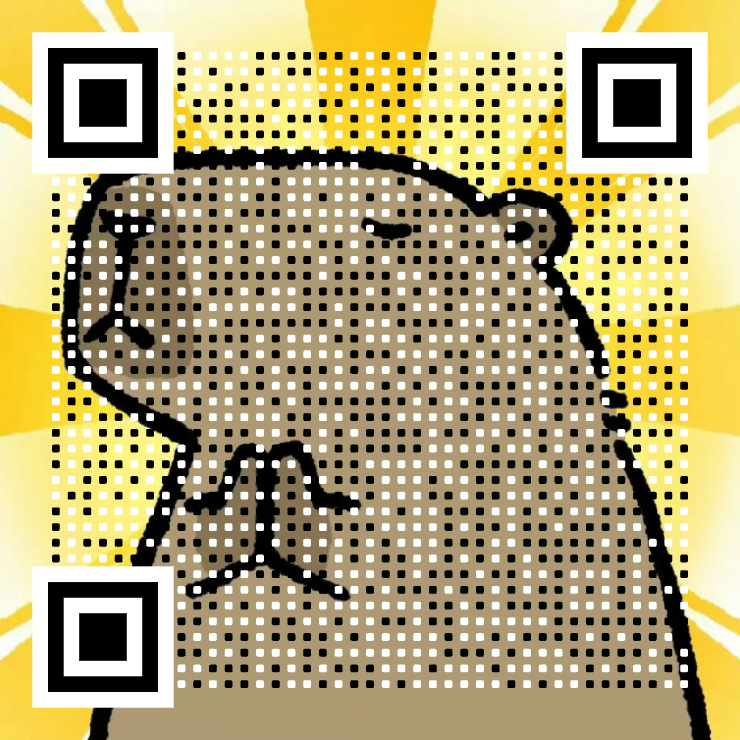
Scan to reach support

Ask us if you get stuck

Support QR code